
















As modern applications increasingly rely on secure and scalable identity management, AWS Cognito has become a go-to solution for handling authentication and user access. However, while it simplifies implementation, scaling authentication workflows often introduces hidden costs and operational challenges.
In this guide, we’ll explore how AWS Cognito works, where costs come from, and how to optimize its usage effectively – in short, everything you might need to maximize its impact and value.
Key Highlights
> AWS Cognito simplifies identity management for modern applications while freeing teams from maintaining custom identity infrastructure.
> Monthly active users are the primary cost driver (authentication patterns, security features, SMS-based MFA usage all influence total cost behavior).
> Financial optimization – f.e., by securing up to $100,000 free AWS credits – can significantly enhances cloud cost efficiency, including AWS Cognito expenses.
What Is AWS Cognito
AWS Cognito is a fully managed identity and authentication service that enables applications to authenticate users, manage identities, and control access to resources.
In practice, this means you don’t need to design your own authentication system, maintain user databases, or implement complex security logic. That’s exactly what makes the solution stand out – unlike traditional identity systems, AWS Cognito provides these capabilities out of the box and scales automatically as your user base grows.
| Traditional Identity Infrastructure | AWS Cognito |
| Custom authentication systems | Managed identity service |
| Manual user database management | Built-in user directory |
| Custom token generation | Automatic token management |
| Infrastructure provisioning | Serverless architecture |
| Custom security policies | Built-in security mechanisms |
Altogether, this allows teams to reduce development effort and minimize operational overhead while maintaining secure and scalable authentication. In particular, AWS Cognito covers these areas:
- User registration and login;
- Authentication workflows;
- Access token generation;
- Identity federation;
- Session management;
- Multi-factor authentication;
- Device tracking and security monitoring.
Key Capabilities of AWS Cognito
From an architectural perspective, AWS Cognito serves as a centralized identity layer that consolidates numerous aspects: authentication, federation, authorization, security, you name it. Check out the key features in the table – we’ll review each of them in more detail below.
AWS Cognito: Core Features Overview | |||
| Category | Feature | What It Does | Practical Impact |
| Authentication | Username/password login | Standard credential-based authentication | Baseline login support |
| Authentication | Passwordless (OTP, magic links) | Enables login without passwords | Improved UX, reduced friction |
| Authentication | Social login | Google, Apple, Facebook integration | Faster onboarding |
| Authentication | Enterprise SSO | SAML-based authentication | B2B and enterprise readiness |
| Authentication | Multi-factor authentication (MFA) | Adds second verification layer | Stronger security |
| Authentication | Device-based authentication | Recognizes trusted devices | Reduced repeated MFA |
| User management | Email/phone verification | Confirms user identity | Fake accounts prevention |
| User management | Password reset & recovery | Handles account recovery flows | Custom logic elimination |
| Federation | Identity federation | Aggregates multiple identity providers | Unified identity system |
| Federation | Identity linking | Maps multiple providers to one user | Duplication prevention |
| Authorization | Identity Pools | Issues temporary AWS credentials | Secure AWS access |
| Authorization | IAM integration | Applies role-based permissions | Fine-grained access control |
| Authorization | Direct AWS access | Client interacts with AWS services | Reduced backend layers |
| Security | Adaptive authentication | Risk-based login evaluation | Suspicious activity detection |
| Security | Device fingerprinting | Tracks login patterns/devices | Session abuse prevention |
| Security | Account lockout policies | Blocks repeated failed attempts | Brute-force attacks stopping |
| Security | Compromised credential detection | Identifies leaked credentials | Account takeover prevention |
| Security | Advanced threat protection | Monitors abnormal behavior | Credential stuffing mitigation |
| Infrastructure | Serverless architecture | No infrastructure management | Lower operational overhead |
| Infrastructure | Auto scaling | Handles traffic spikes | High reliability |
| Integration | AWS ecosystem integration | Works with IAM, Lambda, API Gateway | Faster implementation |
User Authentication
AWS Cognito provides a flexible framework where authentication flows can be composed, adapted, and extended based on real-time conditions. Teams can design context-aware experiences that balance several important aspects. In particular:
> Security. AWS Cognito provides protection against unauthorized access by triggering MFA for suspicious logins or sensitive actions;
> User experience. Recognized devices, longer sessions, and other features ensure reduced friction for trusted users;
> Cost efficiency. Unnecessary expenses are reduced from minimized SMS-based MFA usage and eliminating redundant authentication calls.
AWS Cognito: Supported Authentication Methods | |||
| Method | Typical Use Case | Key Considerations | Impact |
Username/password | Default login for most apps | → Requires secure storage & policies → Risk of credential reuse→ Needs reset/recovery flows | Low cost, moderate friction |
Passwordless (OTP, magic links) | Mobile-first / consumer apps | → Depends on email/SMS delivery→ OTP expiration handling → risk of interception (SMS/email)→ Fallback mechanisms needed | Higher UX, possible SMS cost |
Social login | Fast onboarding (B2C) | → External dependency → User identity mapping/linking → Handling provider outages → Limited control over user data | Low friction, minimal cost |
Enterprise SSO | B2B / enterprise SaaS | → Requires IdP integration → Dependent on enterprise systems→ Role/permission mapping | High UX for enterprise users |
| Multi-factor authentication | High-security environments | → SMS vs app-based trade-offs → Backup methods needed → Regulatory requirements | Higher cost (SMS), better security |
Device-based authentication | Returning users | → Requires device tracking→ Handling lost/new devices → Security gaps if misconfigured | Improves UX, reduces MFA frequency |
Moreover, what makes this particularly powerful in practice is the ability to compose these methods. For example, from our observations, teams often implement a combination of these:
- Step-up authentication to trigger MFA only for high-risk logins;
- Region/device-based login policies that apply stricter checks for new locations/devices, simplify access for trusted ones;
- Hybrid login models (e.g., social + email fallback) enabling fast social login with email/password fallback for reliability.
Identity Federation
AWS Cognito acts as a central federation broker, integrating multiple providers: Google, Apple, Facebook, SAML-based enterprise identity providers (Okta, Microsoft Entra ID, Ping Identity), you name it.
This capability becomes game-changing in tackling identity fragmentation. This way, 3 core changes happen: 1 – identities from different providers can be linked to a single user, 2 – onboarding becomes frictionless, 3 – account duplication is minimized.
Access Control for AWS Resources
Through Identity Pools, Cognito can issue temporary AWS credentials mapped to IAM roles. This allows applications to grant users secure time-limited access to AWS services without exposing long-lived keys.
In such a case, several advantages follow:
> Permissions are defined centrally in IAM and scoped to specific resources and actions.
> Access logic doesn’t have to be embedded in application code.
> It fuels direct client-to-AWS communication (e.g., mobile → S3), since frontend applications can securely interact with AWS services using temporary credentials.
> There is reduced reliance on backend proxy layers, meaning fewer custom APIs are required for operations like file uploads, downloads, or simple data access.
> This not only lowers development effort but also decreases infrastructure and maintenance overhead.
Built-In Security Features
From our experience, security is where AWS Cognito delivers the most tangible value compared to custom implementations. Thanks to it, teams don’t have to build and maintain security logic in-house – they can rely on a managed security layer embedded directly into authentication flows, including the following:
- Multi-factor authentication;
- Adaptive (risk-based) authentication;
- Device fingerprinting and tracking;
- Account lockout policies;
- Compromised credential detection;
- Advanced threat protection.
Together, this enables a comprehensive and layered security approach. A few additional points that are worth mentioning:
> AWS continuously updates these controls to keep pace with emerging threats;
> The design aligns with evolving threat landscapes, ensuring relevant and up-to-date protection;
> Native integration into authentication flows removes the need for custom security logic.
Limitations & Considerations of AWS Cognito Functionality
Going beyond AWS Cognito capabilities, it’s important to recognize that it may not cover every use case out of the box. From our experience, these are the cases where AWS Cognito can be challenging:
> Limited UI/UX customization out of the box
The hosted UI is convenient, but it might often feel too restrictive for production-grade products – especially those with strict branding or complex user journeys. Most teams eventually move to custom frontends.
> Advanced workflows require additional logic
From what we’ve experienced, more sophisticated scenarios (f.e., custom authentication flows, conditional access, complex user states, etc.) typically require AWS Lambda triggers – which increases architectural complexity.
> Debugging and observability can be difficult
Due to AWS Cognito’s managed and abstracted nature, it’s not always straightforward to trace authentication issues (e.g., failed logins, token errors, etc.). As a result, deep integration with logging tools might be required in such cases.
> Pricing can scale with usage patterns
While MAU pricing is predictable, costs can grow quickly due to several factors: high user volumes, SMS-based MFA, or advanced security features (if not carefully managed).
Free virtual cards for non-EU residents
Open in 1 working day, issue 100 virtual cards, and get up to 1.25% cashback.
Get a free account
Top Use Cases for AWS Cognito
From our experience working with real-world identity workloads, assessing AWS Cognito is less about features on paper and more about how it performs in production. Therefore, let’s review and evaluate several specific cases.
✅ Case #1: Consumer Identity Platforms
In this scenario, we focused on one use case of a consumer identity platform – particularly, a SaaS application with a large and rapidly growing user base (the same can apply to marketplaces and subscription services, since these environments have similar requirements: scalable authentication, seamless onboarding, minimal operational overhead, etc.).
During testing, AWS Cognito handled user growth without requiring any infrastructure intervention. User authentication scaled automatically, and built-in flows (sign-up, verification, recovery) significantly reduced backend complexity.
From a product perspective, this translates into faster onboarding, fewer edge-case failures, and lower operational overhead – all of which directly impact user acquisition and retention.
| Assessment Highlights | |
| Dimension | Behavior |
| Primary value | Scalable user authentication |
| Scalability | Automatically scales to millions of users |
| Operational overhead | Minimal infrastructure management |
| Security | Built-in authentication protections |
| Key consideration | MAU-based pricing |
✅ Case #2: Mobile Applications
Next on, we aimed at focusing on how authentication behaves across platforms and under frequent user interactions – thus, evaluating AWS Cognito in a mobile-first environment.
During testing, we observed the following:
> Integration via AWS SDKs (iOS, Android, React Native, Flutter) proved straightforward.
> Authentication flows were implemented without having to build custom logic.
> Token-based sessions proven to work consistently across devices.
> We specifically tested repeated login cycles, token refresh behavior, and session persistence – all of which remained stable without requiring backend adjustments.
> There’s a risk that high-frequency authentication calls (e.g., frequent token refreshes) introduce unnecessary load if not properly configured.
Overall, from a practical standpoint, AWS Cognito proved to simplify mobile identity management significantly for our case. Specifically, one noticeable advantage was the consistency across platforms: the same authentication logic applied regardless of the client, which helped us reduce fragmentation.
However, it’s important to mention that optimal performance still depends on how efficiently token lifecycle is handled on the client side.
| Assessment Highlights | |
| Dimension | Behavior |
| Primary value | Mobile identity management |
| Integration | Native mobile SDKs |
| Security model | Token-based authentication |
| Infrastructure | Fully managed |
| Key consideration | Monitor authentication frequency |
✅ Case #3: API Security
Another use case we tested AWS Cognito on is API security. In this scenario, we aimed to evaluate how authentication behaves under real request loads and how effectively it can secure APIs without introducing additional architectural complexity.
Some highlights from our testing include:
> Integration with API Gateway allowed us to enforce authentication without modifying backend services.
> The use of JWT tokens simplified request validation and removed the need for session handling.
> Authentication behavior was consistent across services, making it easier to standardize security.
> Under repeated and concurrent request scenarios, the system maintained stable performance without additional configuration.
> A key consideration is the cost of token validation per request, which can accumulate in high-volume environments.
| Assessment Highlights | |
| Dimension | Behavior |
| Primary value | Secure API authentication |
| Integration | Works with API Gateway |
| Security | Token-based authorization |
| Operational Complexity | Minimal |
| Key Consideration | Token validation overhead |
Besides, the official AWS documentation pinpoints a range of additional potential AWS Cognito use cases:
- Stateless architecture design and migration – a case where AWS Cognito enables applications to move from stateful session management to stateless architectures by externalizing identity handling;
- Authentication for Web3 and decentralized applications (dApps) – enabling integration with digital wallets to issue temporary AWS credentials for secure interaction between decentralized apps and AWS services;
- Secure access to unstructured data repositories – identity management and fine-grained access control in data-heavy environments in finance;
- Web application access control patterns – creating an authentication layer integrated with Application Load Balancer, API Gateway, WAF, and others;
- Multi-tenant SaaS API security and throttling – to provide tenant-aware authentication mechanisms that help enforce fair usage policies and request throttling across multiple users or organizations;
- API proxy and authentication flow extension – the case allowing authentication workflows to be extended through API Gateway with custom logic without altering the core identity system;
- Machine-to-machine (M2M) authentication and disaster recovery – supporting secure service-to-service authentication and can be configured across regions;
- Developer productivity and analytics platforms – a case of delivering secure authentication in serverless environments.
How AWS Cognito Works
At a high level, AWS Cognito provides a complete identity system by clearly separating authentication (who the user is) from authorization (what the user can access). This separation is what allows systems to scale securely without tightly coupling identity logic with application code.
Cognito achieves this through two core components: 1 – user pools (responsible for managing user identity and authentication), 2 – identity pools (responsible for granting access to AWS resources). To better understand them, let’s dive into its architectural capabilities in more detail (or check out the official AWS documentation).
AWS Cognito Architecture Overview
A typical Cognito flow follows a structured pipeline. Here’s what it looks like:
→ Step 1: User Interaction
The user initiates authentication by signing in (or signing up) through the application.
→ Step 2: User Pool Authentication
The application sends user credentials to the AWS Cognito User Pool, which verifies identity (e.g., username/password, MFA, or federated login via external identity providers such as SAML, OIDC, or social platforms). The User Pool acts as a managed user directory and authentication engine, supporting hosted UI flows and custom logic through AWS Lambda triggers (e.g., pre-authentication, post-confirmation).
→ Step 3: Token Generation
After successful authentication, the User Pool issues JWT tokens: ID token, access token, and refresh token. These tokens can be customized or enriched via Lambda triggers and are designed to be validated independently by downstream services.
→ Step 4: Token Exchange with Identity Pool
The application forwards the ID (or OpenID) token to the AWS Cognito Identity Pool, where it is validated and used to establish an identity context for authorization.
→ Step 5: Temporary AWS Credentials Issuance
The Identity Pool maps the authenticated user to an IAM role based on token claims, user attributes, or group membership, enabling fine-grained, role-based access control. It then generates temporary AWS credentials via STS. Identity Pools can also issue credentials for unauthenticated (guest) users with restricted permissions.
→ Step 6: Access to AWS Resources
The application uses these temporary credentials to securely interact with AWS services such as S3, API Gateway, or DynamoDB. At the same time, services like API Gateway or backend systems validate JWT tokens to enforce authentication and authorization at each request.
The key aspect of this flow is that it is stateless: meaning, no session storage is required, and each request can be validated independently using tokens. This reduces backend complexity and improves scalability.
AWS Cognito Pricing Overview
AWS Cognito pricing is primarily based on monthly active users, which makes it predictable and aligned with actual application usage.
A user is counted as active if they perform at least one authentication-related action within a given month (signing in / refreshing a session / completing an authentication flow / etc.). Importantly, each user is only counted once per month, regardless of how many times they log in. This means the following:
- You’re not charged per request or per login;
- Frequent users don’t increase costs beyond a single MAU count;
- Pricing scales naturally with your user base growth.
AWS Cognito typically offers a free tier (for up to 10,000 MAUs for user pools), after which pricing increases in tiers based on volume.
However, it’s important to note that MAU-based pricing is only part of the cost structure. Additional charges may apply depending on how you use the service, including:
- Advanced security features – increase the cost per MAU when enabled (e.g., adaptive authentication, risk detection);
- SMS for MFA and verification – charged per message via SNS; costs grow with login frequency and user volume;
- Federated identities – users still count toward MAU, while increased token exchanges and AWS resource access can drive indirect costs.
From an expert perspective, Cognito pricing is generally cost-efficient for applications with consistent user engagement, but costs can scale quickly in high-growth scenarios or when relying heavily on SMS and advanced security features.
Cognito Pricing Structure | ||
| Pricing Component | Behavior | Typical Cost |
| Monthly Active Users | Primary cost driver | First 50,000 MAU free |
| Additional MAU | Scales with user base | ~$0.0055 per user |
| Advanced Security | Optional add-on | Additional charges |
| SMS MFA | Charged per message | Region dependent |
| Machine-to-machine authentication | Client credential flow | Additional charges |
Let’s review a practical case where AWS Cognito costs are influenced not just by user volume, but by how authentication methods and security features are implemented. As you can see, additional features like SMS MFA and advanced security can significantly impact the total cost beyond the base MAU pricing.
Example: Cognito Monthly Cost Scenario | ||
| Pricing Category | Scenario | Estimated Monthly Cost |
| Monthly active users | 150,000 MAU | $550 |
| SMS MFA messages | 40,000 messages | $280 |
| Advanced security features | Enabled | $90 |
| Total Estimated Cost | $920 | |
Meantime, it’s also important to point out that two applications with the same number of users can have very different cost profiles – specifically, depending on their authentication strategy and optimization efforts.
What Drives AWS Cognito Costs
From our experience, AWS Cognito costs depend on way more factors than just user volume. See the table below for more details.
Typical Cognito Cost Escalation Scenarios | ||
| Cost Driver | Impact | Mitigation Strategy |
High SMS MFA usage | Messaging costs increase rapidly | – Use authenticator apps- Enable adaptive MFA- Optimize retries |
Rapid user growth | MAU-based pricing increases | – Clean up inactive users – Segment users- Avoid duplicates |
Frequent re-authentication | Additional authentication traffic | – Use session caching- Extend token lifetime- Optimize flows |
Excessive security features | Additional monthly fees | – Enable selectively- Apply risk-based policies – Review usage |
Multiple identity providers | Increased authentication complexity | – Consolidate providers – Standardize mapping – Monitor usage |
AWS Cognito Cost Optimization Best Practices
From our experience, AWS Cognito can remain extremely cost-efficient if the authentication architecture is designed properly. See some practical strategies we recommend for optimizing AWS Cognito usage.
| AWS Cognito Optimization: Quick Wins | |||
| Strategy | Effort | Savings Impact | Speed |
| Replace SMS MFA with authenticator apps | Low | High | Immediate |
| Monitor MAU growth | Low | Medium | Immediate |
| Disable unused security features | Low | Medium | Immediate |
| Reduce redundant authentication calls | Low | Medium | Fast |
| Optimize authentication flows (sessions & tokens) | Low | High | Fast |
To achieve immediate cost savings with minimal effort, focus on the following actions:
- Replace SMS MFA with authenticator apps – reduce per-message costs, eliminate dependency on telecom providers, improve security while lowering authentication expenses;
- Monitor MAU growth – track active users regularly, identify unexpected spikes, align usage with pricing tiers to avoid unnecessary cost increases;
- Disable unused security features – review enabled features, turn off those not actively used, reduce background processing and associated costs;
- Reduce redundant authentication calls – audit authentication flows, eliminate duplicate requests, optimize session handling to minimize API usage;
- Optimize authentication flows – reduce login frequency, cache tokens, and avoid unnecessary re-authentication.
| AWS Cognito Optimization: Advanced Strategies | |||
| Strategy | Effort | Savings Impact | Speed |
| Token caching | Medium | High | Medium-term |
| Session lifecycle optimization | Medium | High | Medium-term |
| Identity federation optimization | Medium | Medium | Medium-term |
| Authentication monitoring | Medium | Medium | Ongoing |
| Authentication flow architecture redesign | Medium | High | Medium-term |
For more sustainable, long-term improvements, consider implementing the following:
- Implement token caching – store and reuse authentication tokens, reduce repeated validation requests, lower compute and API costs;
- Optimize session lifecycle – adjust session duration and refresh logic, balance security with reduced authentication frequency;
- Improve identity federation – streamline identity providers, reduce redundant authentication steps, centralize access management;
- Enable authentication monitoring – track usage patterns, detect anomalies, continuously refine authentication flows for cost and performance optimization.
Monitoring AWS Cognito Usage
To maintain efficient Cognito usage, it’s important to continuously monitor how authentication flows behave in production. As applications scale, even small inefficiencies (f.e., excessive MFA usage, frequent re-authentication, etc.) can significantly impact both cost and user experience.
To stay ahead of these issues, Cognito usage should be tracked across several key dimensions:
- Monthly active users. The growth should be steady and predictable growth (investigate spikes).
- Authentication success rates. The optimal range is typically ≥ 95-98%; lower rates may indicate UX or configuration issues.
- MFA usage patterns. They should align with risk-based policies, typically around 5-30% (depending on security requirements)
- Login frequency. An average is typically 1-3 times per user per day, significant deviations may signal friction or session issues.
- Token expiration behavior. It should support balanced session management – commonly, access tokens typically last 5-60 minutes, refresh tokens 7-30 days, + minimal need for frequent re-authentication.
Besides, extra AWS Cognito integrations with AWS monitoring services can help maintain visibility and control: for example, Amazon CloudWatch is efficient for metrics, logs, and alerting, AWS CloudTrail – for auditing authentication and access events.
Getting Started With AWS Cognito
Deploying Cognito is technically simple, but designing efficient identity architecture requires planning. To get it right, follow the checklist below.
| Step-by-Step AWS Cognito Setup & Governance Checklist |
| 1. Define identity architecture |
☐ Select authentication methods (email, phone, social, etc.)☐ Choose identity providers (Cognito, Google, SAML, etc.)☐ Define session duration and token lifetimes☐ Establish security policies (password rules, access controls)☐ Configure MFA requirements |
| 2. Create a user pool |
☐ Configure required user attributes (email, phone, custom fields)☐ Define password policies (length, complexity, rotation)☐ Set token expiration and refresh settings☐ Enable and configure MFA options |
| 3. Configure identity federation |
☐ Connect social identity providers (Google, Facebook, etc.)☐ Set up SAML or enterprise identity providers☐ Map attributes between providers and Cognito☐ Test authentication and login flows |
| 4. Integrate with applications |
☐ Connect applications using AWS SDKs☐ Configure OAuth flows (authorization code, implicit, etc.)☐ Set up Cognito hosted UI or custom login☐ Validate end-to-end authentication and token handling |
How Spendbase Helps Reduce AWS Cognito and Cloud Infrastructure Costs
From our experience, organizations that use AWS efficiently pay close attention to both technical architecture and financial optimization.
To ensure these both aspects are covered, Spendbase helps companies reduce cloud infrastructure spending. As an official AWS partner, the Spendbase team can help businesses secure up to $100,000 in free AWS cloud credits – and more.

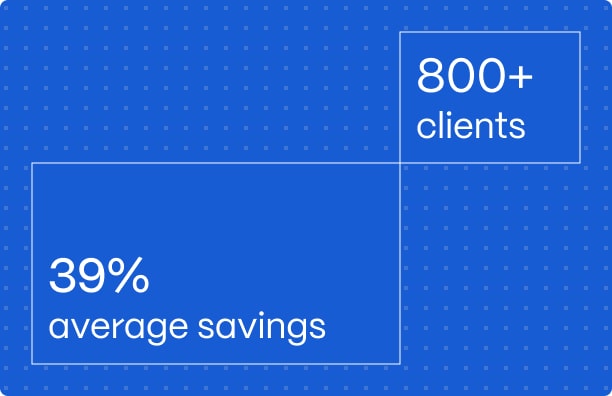
Additionally, the Spendbase suite of spend management solutions helps companies unlock significant savings beyond cloud costs. For example, our clients save an average of 39% on SaaS expenses, earn up to 1.25% cashback, and prevent unnecessary spend through smart digital banking and corporate cards, among other benefits.
Reach out to learn how we can help you save.

You might want to read


Cost optimization
AWS Grants: Credits, Rules, FinOps (2026)AWS grants can feel like free money, until you realize they're really non-dilutive capital...


 EN
EN  ES
ES  PT
PT  DE
DE  FR
FR  TR
TR